
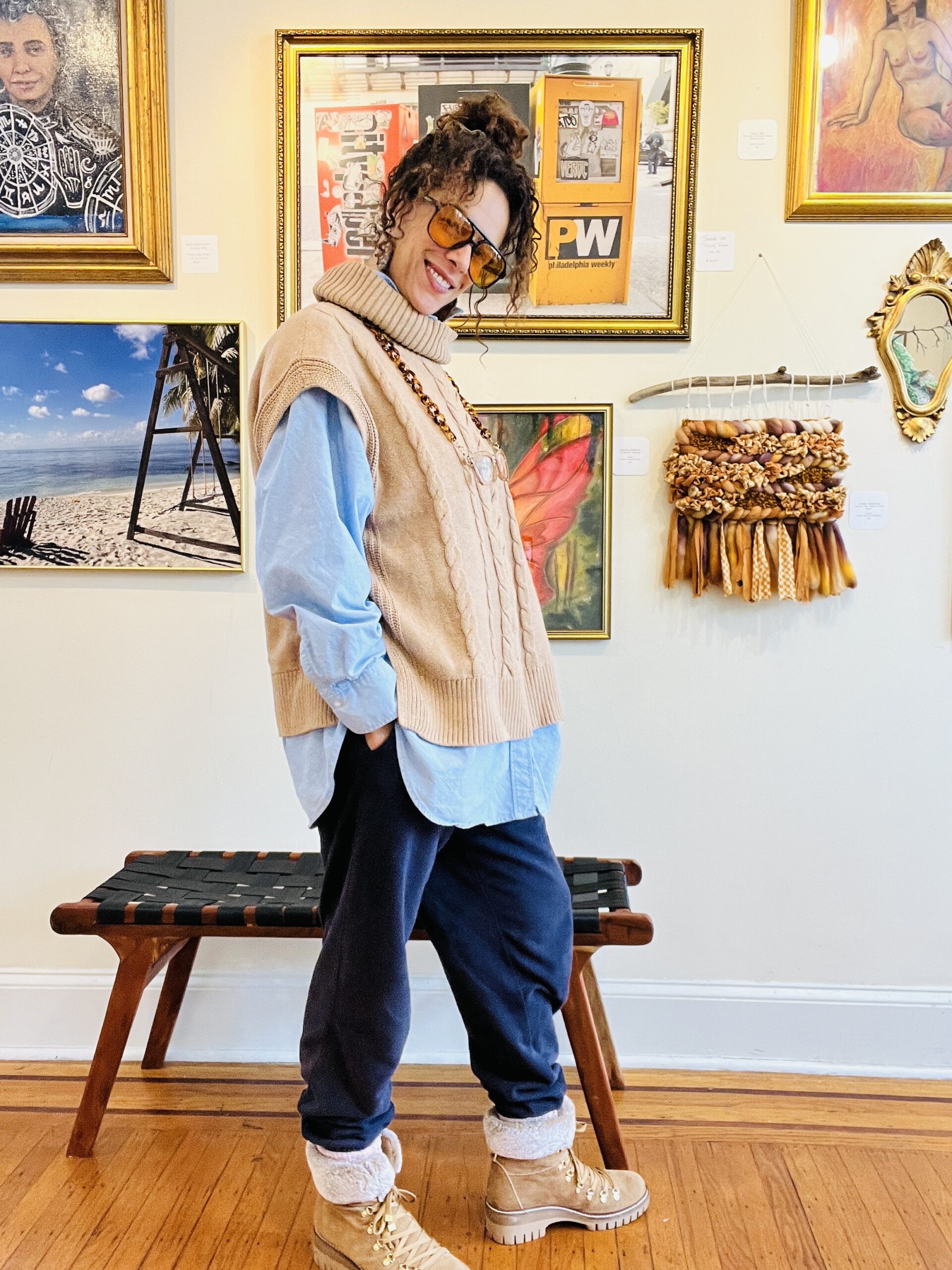
Artist and gallery owner Jonene Lee doesn´t curate egos
Before NoName Gallery occupied its light-filled corner in Chestnut Hill — before sales dots and spreadsheets — Jonene Lee was a suburban kid transfixed by a film about breakdancing and turntables.
She was eleven.
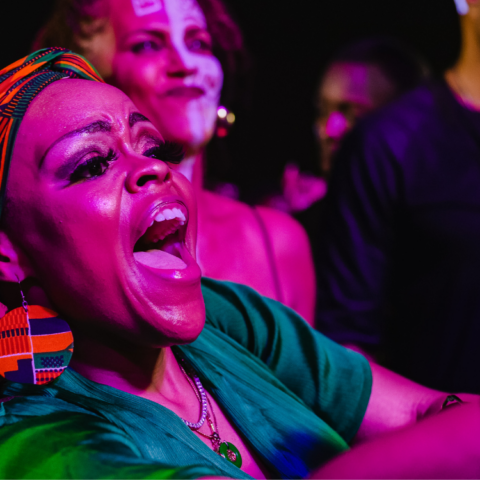
Raised between West Philadelphia lineage and Bucks County suburbia, Lee learned early what it meant to feel both inside and outside a room. Hip-hop became a portal — not just music, but movement, style, language. She found her people in dance circles and later with Montage (now Ladies of Hip Hop), a collective of women translating street vocabulary into stage performance.
A camera was always nearby.
What began as a childhood gift evolved into something sharper: nights documenting DJs, artists, and the pulse of Philadelphia’s music scene. She organized hundreds of local DJs into a single portrait — a feat that earned civic recognition from Mayor Michael Nutter and solidified her place behind the lens.
That ascent unfolded alongside a private dependency on opioids.
Sobriety brought rupture. The camera quieted. Motherhood, recovery, and steady work in social services replaced late-night events. In Chestnut Hill — one of Philadelphia’s most historically affluent enclaves — she walked, observed, recalibrated. The pace shifted. So did her sense of possibility.
Eventually, a vacant storefront offered an experiment.
Lee asked to use the space. Permission was granted. What followed was less exhibition than introduction: music, street-rooted artists, an unexpected collision of cultures. The neighborhood responded.
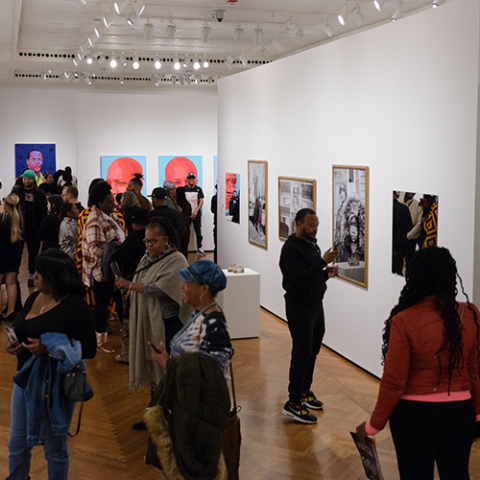
Three years later, NoName Gallery remains — not sterile, not performative, but lived-in. Less showroom, more exchange. A continuation, not a reinvention.
PALATE: Do you remember when art first chose you?
Jonene Lee:
“I saw Beat Street and fell in love with hip-hop. That was my first art. Dance was my first art.”
She grew up between West Philly roots and Bucks County suburbia — white-passing family, not white-passing herself. Hip-hop became refuge. MTV Raps. Battle circles at King of Prussia. Eventually, Montage (now Ladies of Hip Hop), a women’s street-dance collective born from Rennie Harris’s movement world.
“That group helped me find myself. It was every color. And we could all dance.”
PALATE: When did the camera enter?
Lee:
“My mom gave me one. I took it everywhere.”
Eventually a Canon Rebel — the camera she used to get inches from Q-Tip, Mos Def, Scarface. She gathered 350 Philly DJs into one frame and received a city proclamation declaring Philadelphia DJ Day.
All while quietly addicted to opioids.
“I would never have had the courage to shoot people like that sober. I was in their faces.”
PALATE: And then you stopped.
“After rehab, I moved to Chestnut Hill. I had a kid. My pictures became flowers and dogs.”
The quiet reset her nervous system. A job in social work helped her understand her mother’s mental illness. Walking one of Philadelphia’s most historically exclusionary neighborhoods shifted something deeper.
“It never dawned on me that it was an option to live comfortably. To just… make art and have a dog.”
PALATE: How did NoName begin?
“There was an empty storefront. I asked the landlord if I could do a pop-up. He said yes.”
Hip-hop arrived in Chestnut Hill wrapped “in a big red bow.” Wu-Tang on the speakers (clean versions). Graffiti writers turned fine artists. The neighborhood showed up.
Three years later, NoName remains — less white cube, more conversation.
PALATE: The name?
“I couldn’t think of one. So… NoName.”
What began as indecision became identity.
“Once you get to know me, it makes sense.”
PALATE: How do you choose artists?
“I look at the person first. I don’t care about your accomplishments. I want to know who you are.”
Ego is disqualifying.
“I don’t care how great your art is. I don’t want to work with an ego.”
She balances instinct with pragmatism. Painted skylines sell. Familiarity sells. Risk is subsidized through classes, rentals, murals, grants.
“I would have closed three years ago if I relied on red dots.”
“I don’t care how great your art is. I don’t want to work with an ego.¨
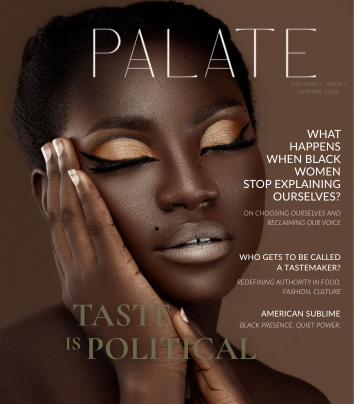
PALATE: Our theme for this issue is Taste Is Political. Does your gallery reflect the moment?
Lee exhales.
“We all know how we feel. We’re just going to keep creating.”
No overt protest banners hang on her walls — not out of avoidance, but survival.
“Is it going to sell? Are we going to move it? I don’t know.”
“I feel like I finally have a real community.”
PALATE: Your community feels personal.
“My Instagram is a comedy horror show,” she laughs.
But the vulnerability is real. She recalls welling up reading a follower’s message of gratitude.
“I feel like I finally have a real community.”
PALATE: What’s next?
“A T-shirt. Something wearable.”
She pauses.
“I want to create something from my mind that people can wear.”
NoName may have been born from indecision, but it now reads as something decidedly different. Intention.