
A grown-woman meditation on beauty, honesty, and care without performance
There is a particular lie that begins to circulate once a woman crosses forty. It is subtle at first, dressed up as concern and cloaked in “helpful” language. You start to hear words like maintenance, reversal, anti-aging—as if time itself were a personal failure, as if the body were something to be corrected rather than cared for.
For Black women, this lie arrives with extra baggage. We are praised for “aging well” when we appear unchanged, and quietly punished when we do not. Our value becomes tethered to how convincingly we can perform youth—without acknowledging the labor it takes to do so, or the wisdom that comes with letting that performance go.
Aging is not a crisis.
It is a fact. And more importantly, it is a privilege.
Beauty Without Panic
The beauty industry thrives on urgency. It sells panic disguised as aspiration, convincing women that the first fine line is a warning sign rather than a record of living. Entire product lines are built around fear—fear of softness, fear of visibility, fear of becoming “before” rather than “after.”
But grown women know something younger ones are still learning: panic is not a beauty strategy.
True care is quiet. It is consistent. It is rooted in honesty about what the body needs now—not what it needed ten years ago, and not what a trend cycle insists it should need next. Beauty without performance is not about chasing a former version of yourself. It is about meeting yourself where you are, with curiosity rather than judgment.
What Aging Actually Looks Like
Aging looks like discernment. It looks like knowing which mirrors to ignore and which ones to trust. It looks like understanding that not every change requires correction, and not every correction requires explanation.
For Black women especially, aging often brings relief. Relief from over-policing the body. Relief from constant self-presentation. Relief from explaining why rest matters, why softness is earned, why boundaries are non-negotiable.
Aging does not erase beauty. It clarifies it.
My Own Relationship to Care at 47
At 47, my skincare routine no longer revolves around fantasy. It revolves around maintenance as respect.
I am not interested in erasing myself. I am interested in caring for the skin I inhabit—skin that has lived through stress, grief, joy, late nights, and long seasons of responsibility. Skin that tells the truth, even when I don’t feel like narrating it.
My routine is intentional, not excessive. Cleanse. Treat. Hydrate. Protect. Repeat. I focus on barrier support, hydration, gentle exfoliation, and consistency over spectacle. I’ve learned that my skin responds better to patience than aggression, and to ritual more than reinvention.
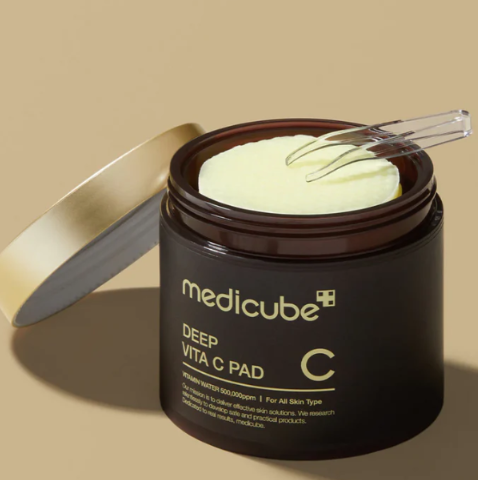
That philosophy guided my recent experience testing Medicube skincare through a sponsored collaboration with YesStyle—an experiment rooted not in transformation, but in curiosity. The appeal wasn’t miracle claims. It was the brand’s emphasis on clinical formulations, skin barrier health, and gradual improvement. (You can read the full breakdown in our YesStyle x Medicube feature.)
That collaboration didn’t change my face. It affirmed my approach.
Because grown-woman skincare is not about chasing youth—it’s about supporting function. About respecting texture. About understanding that skin, like life, benefits from gentleness applied consistently.
Care Is Not Vanity
There is a persistent misconception—particularly around Black women—that caring for oneself is indulgent, vain, or unnecessary. That we should be grateful to age quietly, to disappear gracefully, to “not make a fuss.”
But care is not vanity.
Care is maintenance.
Care is survival.
Choosing products thoughtfully. Booking appointments without apology. Saying no to what drains you. Saying yes to what restores you. These are not aesthetic decisions alone. They are quality-of-life decisions.
And they are political, whether acknowledged as such or not.
Beauty Without Performance
Performance beauty demands explanation. It asks women to justify why they look the way they do—why they’ve changed, why they haven’t, why they chose this procedure or avoided that one. It centers the gaze of others.
Care-driven beauty centers the self.
It asks quieter questions:
How does this feel?
Is this sustainable?
Does this support my body, or am I fighting it?
When beauty is rooted in care rather than fear, it becomes liberating. There is room for intention without urgency. For maintenance without obsession. For pleasure without punishment.
Aging as Authority
Aging confers authority whether the world acknowledges it or not. It sharpens taste. It narrows tolerance for nonsense. It clarifies what matters and what does not.
The grown woman does not need to announce her confidence. It shows up in her choices. In her routines. In the way she moves through the world without rushing to prove she still belongs.
She knows she does.
Aging is not a crisis to be managed.
It is a season to be lived—with care, honesty, and intention.
And that, too, is beautiful.