
Kwame Onwuachi, Tatiana, and the Authority of Arrival
“I want to see a world in which not only the food from the African diaspora but the food from Africa is given the respect it deserves. When I push open the kitchen doors, I want to see a dining room full of diners, especially Brown and Black diners, who looking at their plates feel seen, celebrated, and recognized. And when I look in the mirror, I want to see a young black chef who made that world a reality.” – Kwame Onwuachi, Notes From a Young Black Chef
I didn’t stumble into Tatiana—I planned for it.
Reservations here aren’t incidental. They require intention, timing, and a willingness to wait. And that’s exactly the point. Tatiana, the Lincoln Center restaurant helmed by Kwame Onwuachi, does not reward convenience. It rewards curiosity—about where food comes from, what it carries, and who gets to define its value.

That is precisely why it is worth traveling for.
When I walked into Tatiana, it didn’t feel like a restaurant—it felt like a room that already knew exactly who it was for. The lighting was low, the energy intentional, and every passed plate carried the kind of confidence you can’t fake.
This isn’t just Caribbean cuisine reimagined—it’s memory, precision, and restraint, plated without apology.
Tatiana is not merely a successful restaurant; it is a cultural statement executed with discipline. Opened in 2022 at Lincoln Center, the restaurant draws from the cuisines of the African diaspora—Caribbean, West African, Southern Black American—filtered through New York City’s energy and Onwuachi’s own biography. The result is not fusion as spectacle, but synthesis as scholarship: food that understands lineage, migration, and memory as technique.
Authority Earned, Not Assigned
Onwuachi’s presence at the center of contemporary American dining is often framed as meteoric, but that shorthand misses the deeper truth. His authority was not conferred by trend cycles or media infatuation; it was forged through proximity to multiple culinary worlds and an early understanding of food as both survival and expression. Raised in the Bronx and Nigeria, shaped by kitchens that ranged from fine dining institutions to informal community spaces, Onwuachi learned quickly that excellence is contextual—and that credibility must be practiced.
That sensibility governs Tatiana. The restaurant does not dilute its references to meet expectations of “approachability,” nor does it perform authenticity for an audience presumed unfamiliar with its sources. Instead, Tatiana operates from the assumption that its cuisine deserves the same intellectual engagement afforded to European fine dining traditions. The food is precise without being precious, celebratory without becoming theatrical.
In an industry that still treats Black chefs as exceptions rather than inheritors of a global culinary legacy, Tatiana insists on authority without apology.
A Room That Signals Intention
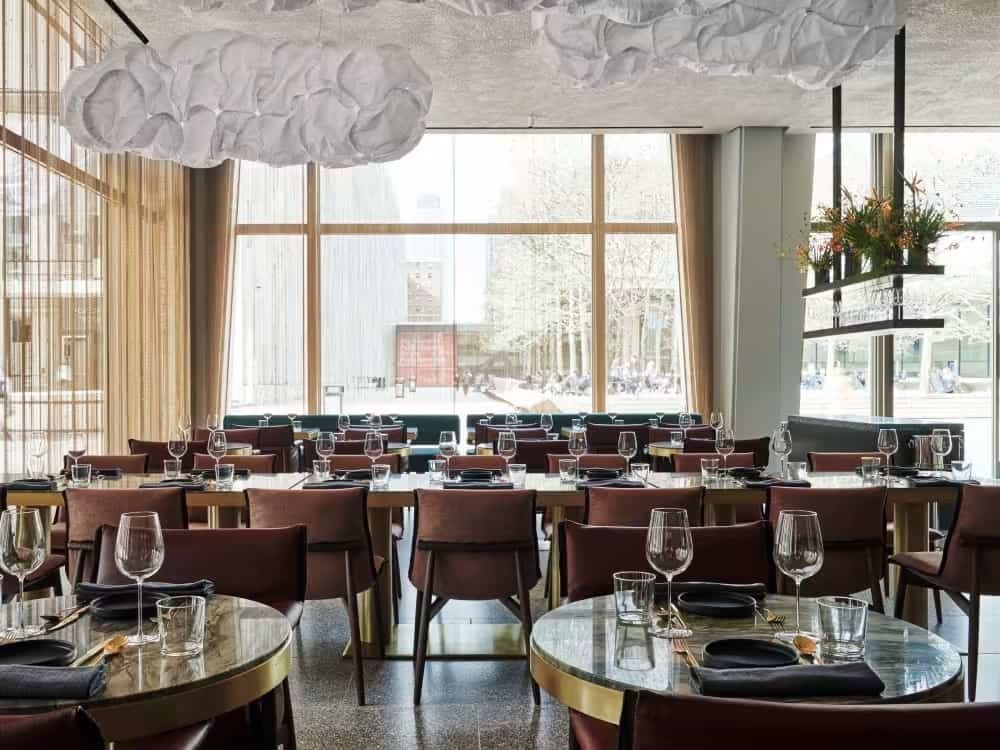
The dining room at Tatiana is warm and deliberately composed—rich woods, textured surfaces, and lighting that flatters rather than performs. The space signals care, not spectacle. Tables are close enough to feel communal, yet sufficiently spaced to preserve conversation. It is a room built for attention, not distraction.
Service reflects that same ethos. Staff are informed, confident, and measured, offering guidance without condescension. Questions are met with clarity rather than recitation. There is an ease to the pacing that resists the rush common to high-profile dining rooms, reinforcing the idea that this is a place for considered engagement rather than conquest dining.
Not everything needs to announce itself to feel important—and Tatiana understands that better than most.
Cuisine With Memory—and Control
Tatiana’s menu reads like a map of the African diaspora rendered in modern culinary grammar. Dishes draw from Caribbean spice profiles, West African techniques, and Southern Black American traditions, but the execution is controlled, not nostalgic. Flavors are layered rather than loud; heat is purposeful, never gratuitous.
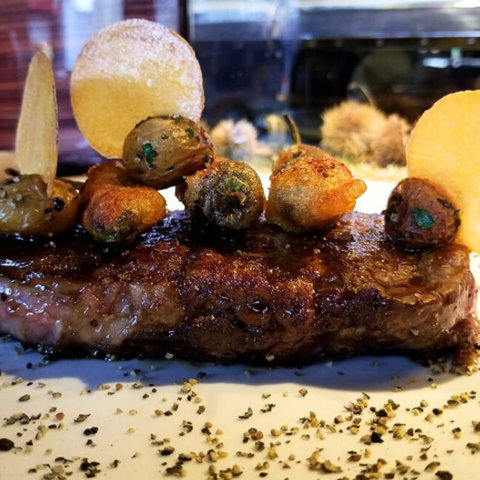
Standout dishes like the short rib pastrami suya and his signature slow-braised oxtails underscore Onwuachi’s command of balance. Proteins arrive deeply seasoned, their preparations attentive to texture as much as flavor. Sauces carry complexity without heaviness, often anchoring the dish in a specific cultural reference while remaining legible to diners encountering it for the first time. Vegetables are treated as integral components rather than afterthoughts, their preparation revealing restraint and respect.
What distinguishes Tatiana is not novelty, but calibration. The kitchen understands when to amplify and when to withhold. Dishes do not compete for attention; they converse with one another. This coherence—across courses, across references—is the mark of a chef in control of his voice.
Success Without Compromise
Tatiana’s popularity has been both immediate and sustained, a rarity in an industry where hype often outpaces execution. Reservations are notoriously difficult to secure, yet the restaurant has resisted the temptation to expand prematurely or dilute its identity for volume. That restraint matters. It signals an understanding that legacy is built through consistency, not acceleration.
Critically, Tatiana has achieved acclaim without flattening its politics. The restaurant does not translate itself for comfort. It does not over-explain its references or soften its point of view. Instead, it trusts that diners—especially those willing to travel for the experience—are capable of meeting it where it stands.
Why the Journey Matters
To travel for a meal is to declare that dining can still be an act of intention. Tatiana rewards that declaration. It offers not just pleasure, but orientation: a reminder that taste is shaped by history, that technique carries memory, and that authority is most compelling when it is quietly assured.
In a culinary landscape still negotiating whose stories are worthy of permanence, Tatiana stands as evidence that excellence rooted in Black diasporic tradition does not require translation to be universal. The long way, in this case, is not a detour. It is the point.
For diners willing to travel—not simply geographically, but intellectually—Tatiana offers something increasingly rare: a restaurant that knows exactly who it is, and serves accordingly.