
“You are still worthy of pleasure, warmth, and tomorrow.”
– Shirley Raines of Beauty 2 the Streetz
Food, with a Crown
At dawn on Skid Row, the city is hushed in a way Los Angeles rarely is. Steam lifts from foil lids. The clatter of folding tables echoes between concrete and canvas. And then there is the voice—warm, musical, unmistakably maternal—calling people forward not as a crowd, not as a problem to be managed, but as royalty. Come here, baby. King. Queen.
This was Shirley “Ms. Shirley” Raines in her element. Before the algorithms found her. Before the headlines. Before the country learned to pronounce the name of Beauty 2 the Streetz. She stood in the soft blue hour offering plates of food as if they were invitations back into the world.
Ms. Shirley, who recently passed away on January 27th, did not treat food as charity. She treated it as ceremony. And in a culture that prefers its compassion discreet and its discomfort invisible, that choice was quietly, unmistakably political.
The Elegant Language of Love
In reality, true luxury isn’t about excess. It’s about intention. Time. Care. The things we choose to linger over. In Ms. Shirley’s universe, a warm meal—handed directly, named directly, blessed directly—was the highest form of refinement. Not because it dazzled, but because it insisted. Those who showed up in her food lines with attitudes soon learned not to mistake Ms. Shirley’s kindness for weakness—their energy was sometimes matched with a sharp, admonishing tongue. But, undoubtedly, Raines’ true language was food.
Food is the most elegant language we have. It speaks before policy. Before opinion. Before blame. To feed someone is to say: you are still worthy of pleasure, warmth, and tomorrow. When Ms. Shirley fed people the city had learned to step around, she was making a declaration as old as any table: neglect is not destiny.
Her outreach didn’t arrive with clipboards or conditions. It arrived with care packages and casseroles, with hygiene kits and hot plates, with hair brushes and lashes tucked beside sandwiches. Beauty and sustenance, offered together—not as reward, not as reform, but as recognition.
How Noticing Became a Revolution
The origin story is deceptively simple. Ms. Shirley was already serving meals when unhoused women began commenting on her hair, her makeup, her presence. She noticed the noticing. She understood that dignity is not a luxury item you add after survival—it is part of survival itself.
From that insight grew Beauty 2 the Streetz: an ecosystem of food, grooming, and affirmation that refused to separate the “necessary” from the “nice.” In a society obsessed with hierarchy, she collapsed it. A full stomach mattered. So did feeling beautiful. So did being touched with care.
This was not optics. This was strategy.
Why Feeding People is Never Neutral
We often describe humanitarian work as apolitical, as if kindness floats above power. Ms. Shirley’s work proved the opposite. Feeding people—publicly, consistently, and without moral tests—exposes the scaffolding of neglect holding our cities up.
It was political because it revealed choice.
Los Angeles’ homelessness crisis is framed as inevitable, intractable, weather-like. But when one woman could mobilize meals, supplies, volunteers, and resources week after week, the myth cracked. Scarcity, she showed, is curated.
It was political because it rejected respectability.
Ms. Shirley did not sort people into “deserving” and “undeserving.” She didn’t demand gratitude, sobriety, or silence. Calling people King and Queen wasn’t branding—it was a jailbreak from the logic that suffering must be earned to be relieved.
It was political because it reclaimed public space.
Skid Row is treated as something to be contained. Ms. Shirley treated it like a neighborhood. Tables became altars. Lines became community. Care took up space where the city preferred absence.
It was political because it insisted beauty is a right.
Beauty 2 the Streetz never framed grooming or glam as frivolous. Beauty was restoration. Choice. Control. A mirror that reflected possibility instead of erasure. For Black women in particular—long tasked with holding families and communities together while receiving the least care in return—this mattered. Profoundly.
Mutual Aid, but Make It Visible
Ms. Shirley understood the power of witness. Social media wasn’t a stage; it was a pipeline. She turned attention into logistics—donations into meals, views into volunteers, virality into consistency. What the world had been trained not to look at, she made unavoidable.
This wasn’t poverty porn. It was proximity. A re-education in empathy that asked viewers to sit with the intimacy of care, not the spectacle of despair.
Love without Prerequisites
What lingered most—beyond the meals, beyond the makeovers—was respect. The way she knelt to speak. The way she remembered names. The way she never flinched.
Ms. Shirley practiced a form of love that does not wait for transformation before offering tenderness. She understood a truth that both organizers and ancestors have always known: people heal faster when they are treated as if they already matter.
Food was her opening argument. It always is. It stabilizes the body so the spirit can breathe. It buys time. It says: stay.
The Legacy on the Table
Ms. Shirley’s passing leaves a silence that is felt in logistics as much as in grief. But her legacy is an operational command. It’s a blueprint for how care can move through a city:
- show up, consistently
- meet needs without humiliation
- give people choices
- speak dignity out loud
- build community around the work
Beauty 2 the Streetz remains proof that compassion, when practiced at scale, becomes infrastructure.
Community and the Communal Table
In a nation that debates homelessness in abstractions, Shirley Raines answered with plates. With names. With love that refused to be rationed by prejudice or patience.
Food, in her hands, was radical not because it was rare—but because it was offered freely, beautifully, and without apology. A quiet insistence that the circle can always be wider, and that the most revolutionary thing we can do is decide—again and again—who gets to eat.
And, now, we must make a radical commitment to carrying on the work of the “good and faithful servant” because access to food and equally as important—dignity—is everyone’s right.
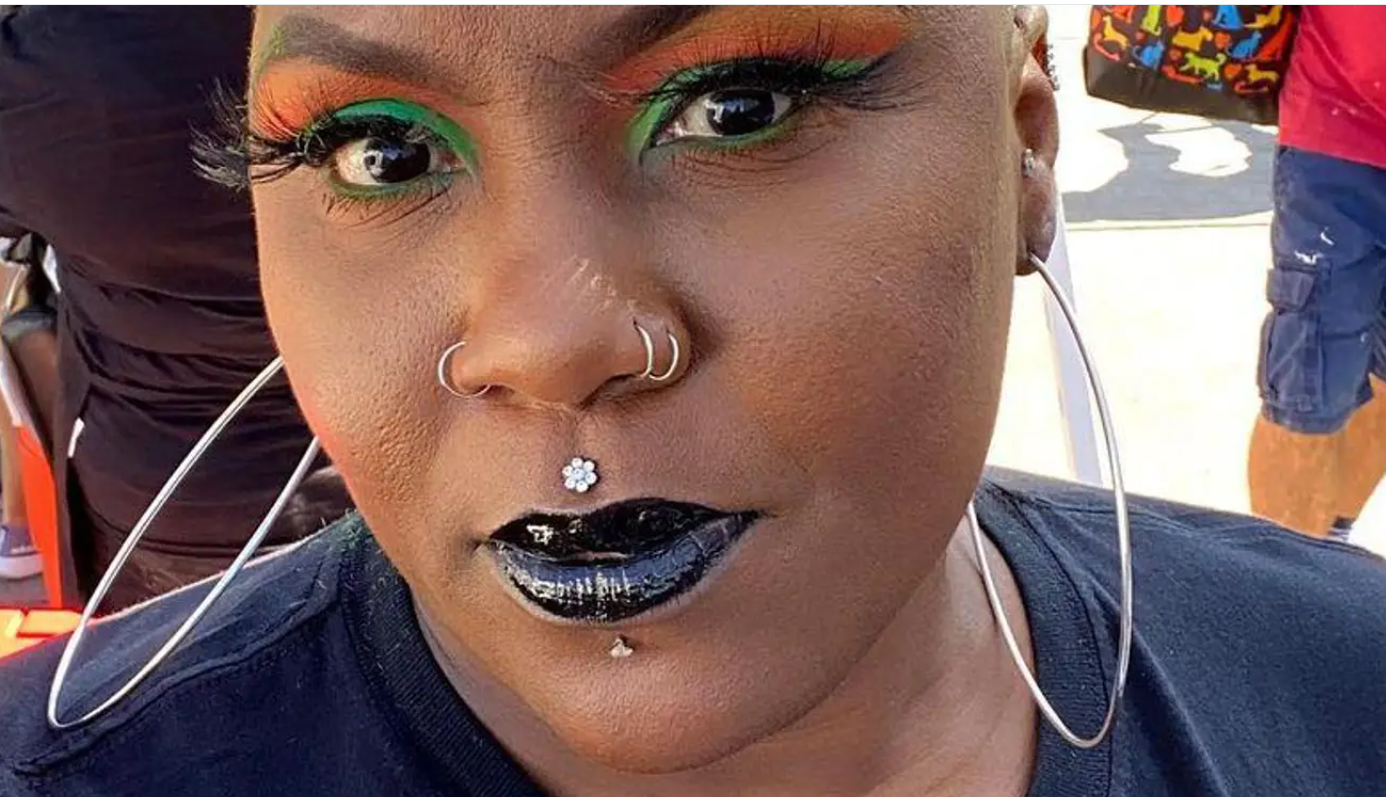
featured photo from PAPER magazine